Art Institute of Chicago
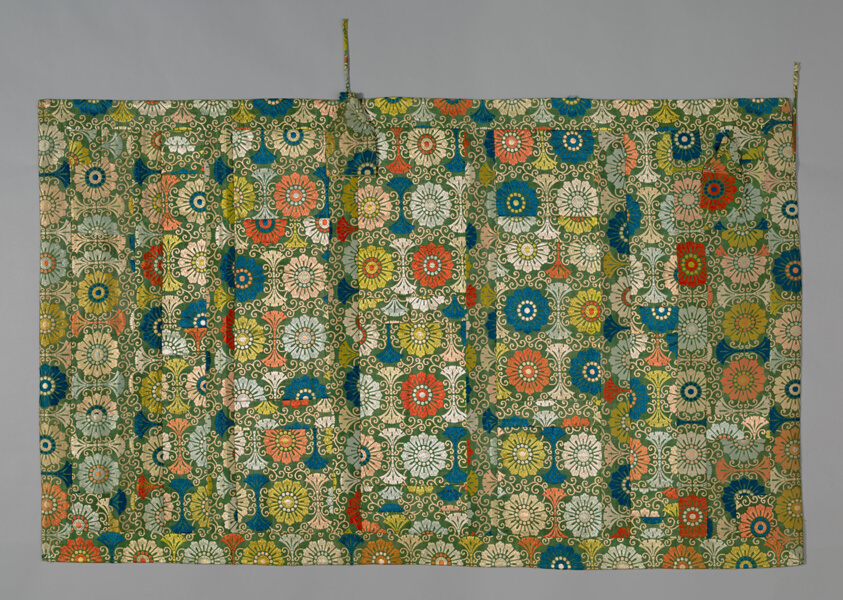
Kesa (Formerly Nō Costume)
Japan
- Date
- 18th century, Edo period (1615–1868)
- Medium
- Silk; twill weave with supplementary patterning wefts
- Culture
- Japan
- Department
- Textiles
- Institution
- Art Institute of Chicago
The fabric of this kesa was made from N̄ costume material probably woven at Nishijin, in Kyoto, for a wealthy samurai for a private theater. The allover pattern of colorful chrysanthemums was created in the kara-ori technique favored for N̄ costume fabrics, in which the long silk weft floats forming the pattern resemble embroidery. As with this kesa, upon the death of the owner the garment would have been donated by the family to her temple as a prayer offering to protect the deceased's soul, thus also bringing honor to the family for making the gift.
The authoritative record is held by Art Institute of Chicago. LinkedCulture surfaces this object and its connections; it does not alter institutional metadata.
Related across collections
Semantically similar works from Art Institute of Chicago and other institutions.
Kesa
Art Institute of Chicago
Kesa
Art Institute of Chicago
Kesa
Art Institute of Chicago
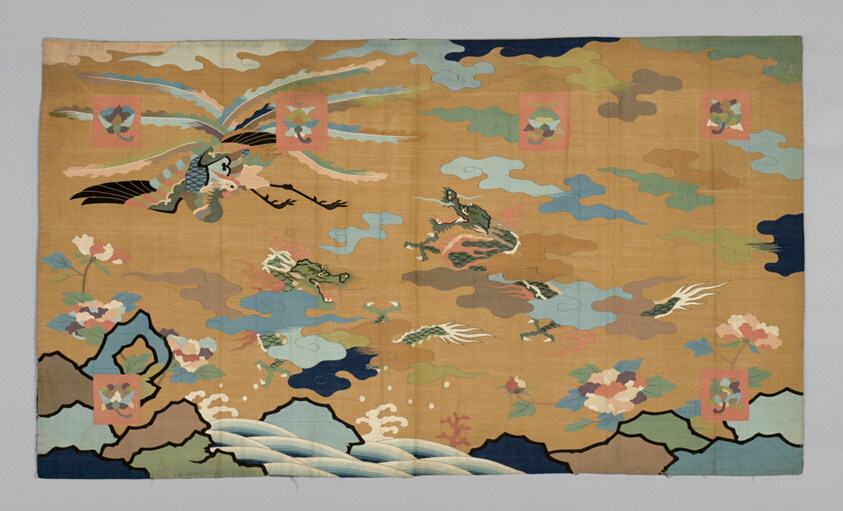
Kesa
Art Institute of Chicago
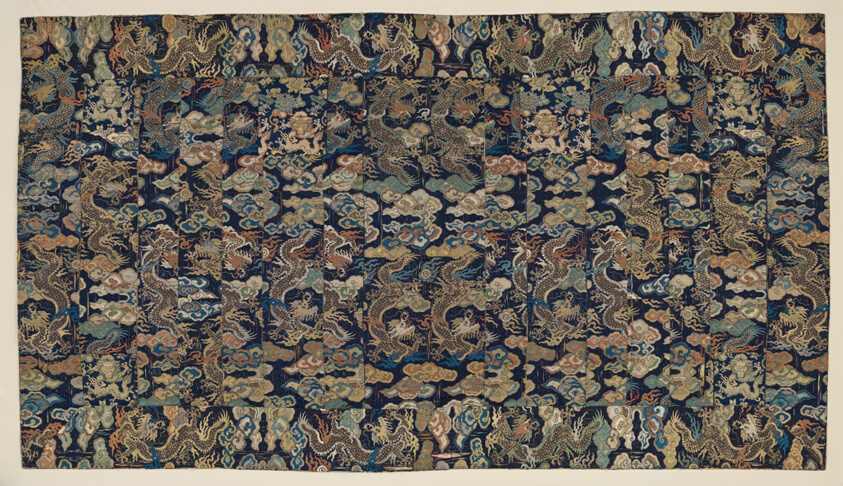
Kesa
Art Institute of Chicago
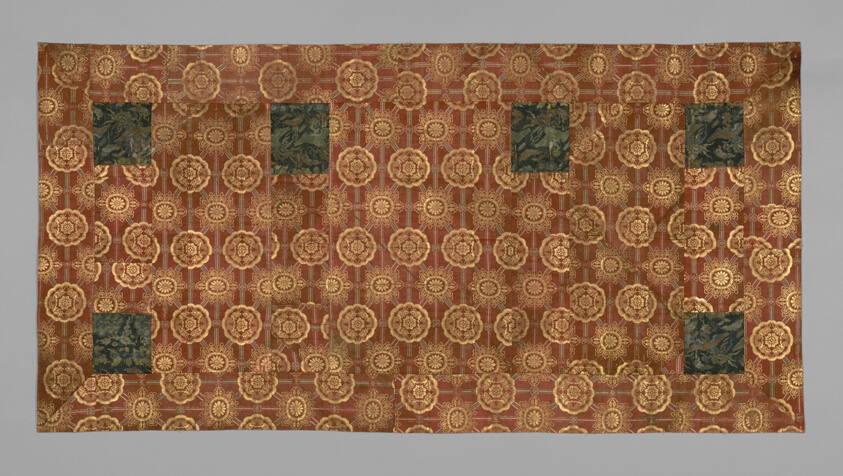
Kesa
Art Institute of Chicago
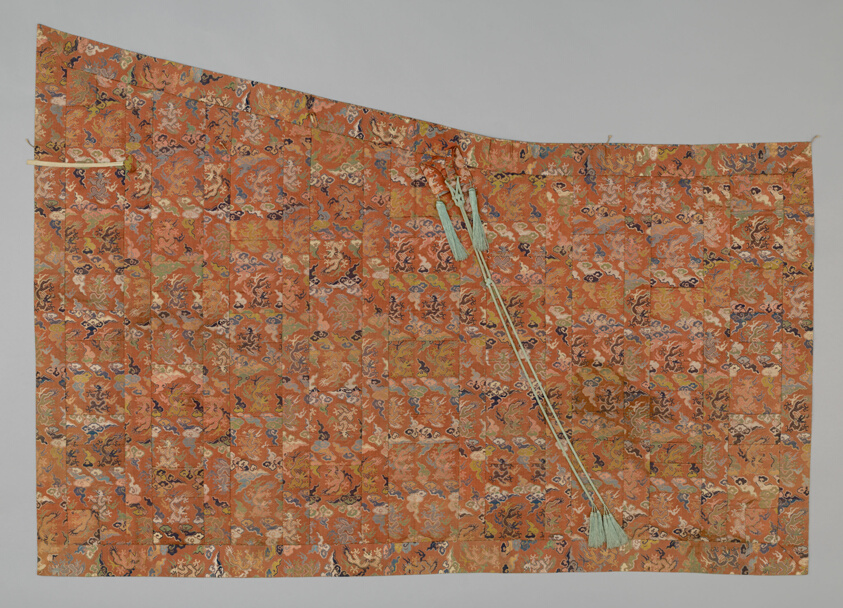
Kesa
Art Institute of Chicago
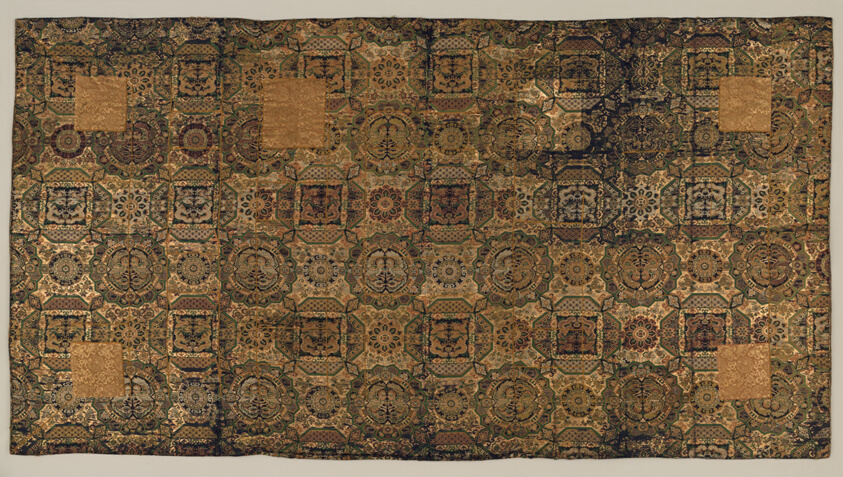
Kesa
Art Institute of Chicago

Buddhist priest's robe (kesa)
Minneapolis Institute of Art

Buddhist priest’s robe with design of chrysanthemums and peonies
Minneapolis Institute of Art
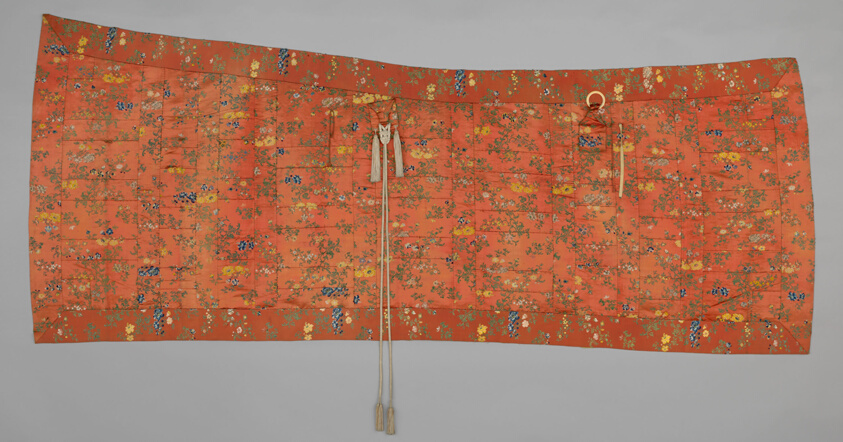
Kesa
Art Institute of Chicago
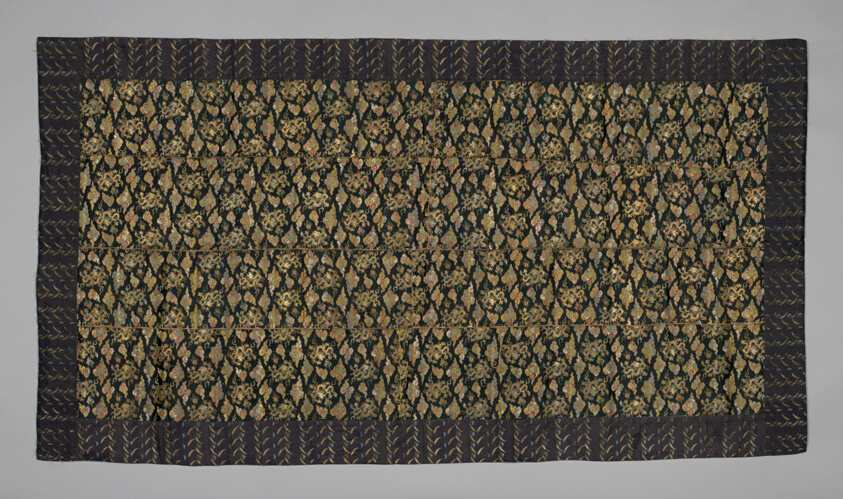
Kesa
Art Institute of Chicago